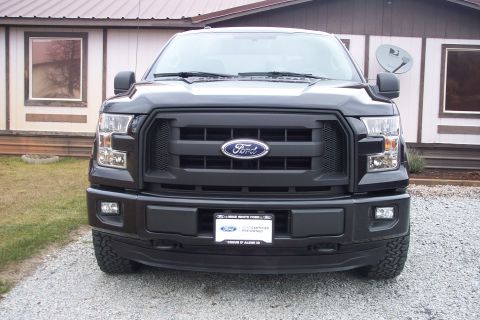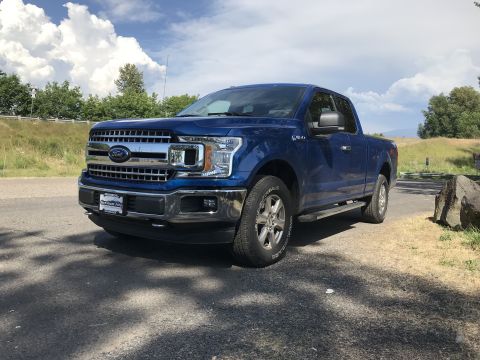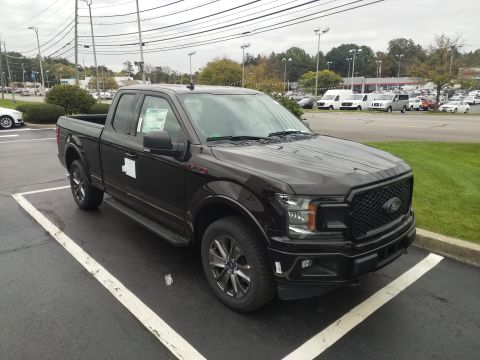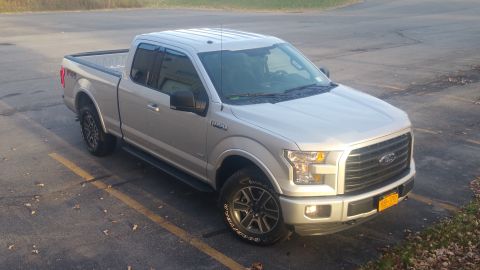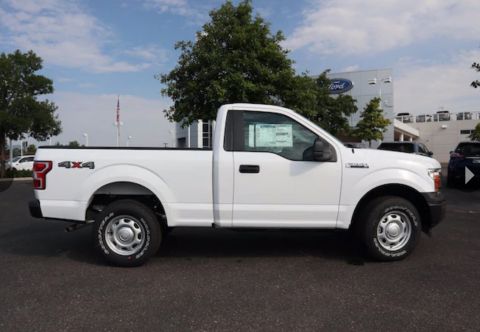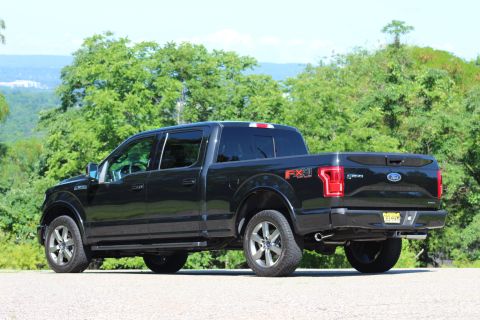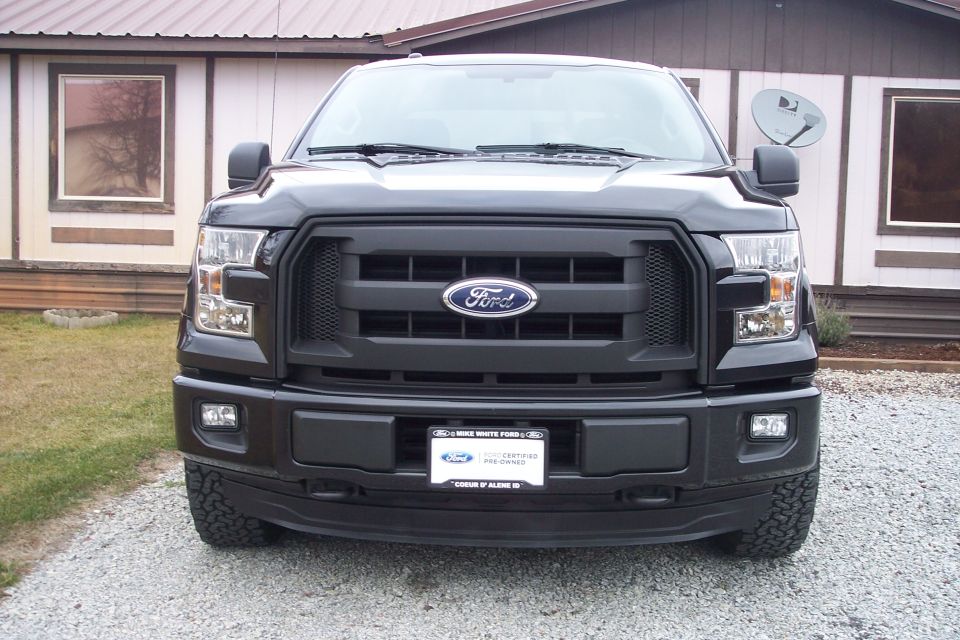
The 2015-2020 Ford F-150 is the thirteenth generation of the half-ton F-Series. Its defining change is the switch to an aluminum-alloy body for 2015, which Ford paired with a fully boxed high-strength steel frame; the frame stayed steel while the cab and bed panels became aluminum. Ford reported that the change cut up to 700 pounds versus the comparable 2014 truck. The generation launched with a 3.5L V6, a 2.7L EcoBoost twin-turbo V6, a 5.0L V8, and a 3.5L EcoBoost twin-turbo V6. For 2017 the F-150 added a 10-speed automatic and a redesigned second-generation 3.5L EcoBoost, and the Raptor returned with a high-output 3.5L EcoBoost V6 rather than the previous V8. A mid-cycle update for 2018 replaced the base 3.5L V6 with a 3.3L V6 and added a 3.0L Power Stroke turbodiesel V6.
2015-2020 Ford F-150 at a glance
- Generation: thirteenth-generation Ford F-150, model years 2015 through 2020
- Defining change: aluminum-alloy body introduced for 2015 over a fully boxed high-strength steel frame (the frame stayed steel)
- Weight: Ford reported a reduction of up to 700 pounds versus the comparable 2014 F-150
- Launch engines (2015): 3.5L Ti-VCT V6 (282 hp), 2.7L EcoBoost V6 (325 hp), 5.0L Ti-VCT V8 (385 hp), 3.5L EcoBoost V6 (365 hp)
- 2017: 10-speed automatic added; second-generation 3.5L EcoBoost (375 hp, 470 lb-ft); Raptor returns with a high-output 3.5L EcoBoost (450 hp, 510 lb-ft)
- 2018 update: base 3.5L V6 replaced by a 3.3L V6 (290 hp); 3.0L Power Stroke turbodiesel V6 added (250 hp, 440 lb-ft)
2015-2020 Ford F-150 year by year
| Year | Engines (horsepower) | Transmission | Notable changes |
|---|---|---|---|
| 2015 Ford F-150 | 3.5 V6 (282); 2.7 EcoBoost (325); 5.0 V8 (385); 3.5 EcoBoost (365) | 6-speed automatic | Thirteenth generation launches with an aluminum-alloy body over a boxed steel frame; the 2.7 EcoBoost is new |
| 2016 Ford F-150 | 3.5 V6 (282); 2.7 EcoBoost (325); 5.0 V8 (385); 3.5 EcoBoost (365) | 6-speed automatic | Engine lineup carries over; SYNC 3 infotainment introduced during the model year |
| 2017 Ford F-150 | 3.5 V6 (282); 2.7 EcoBoost (325); 5.0 V8 (385); 3.5 EcoBoost, 2nd gen (375); Raptor 3.5 EcoBoost HO (450) | 6-speed; 10-speed automatic on the new 3.5 EcoBoost and Raptor | 10-speed automatic introduced; second-generation 3.5 EcoBoost raises torque to 470 lb-ft; Raptor returns with the high-output 3.5 EcoBoost |
| 2018 Ford F-150 | 3.3 V6 (290); 2.7 EcoBoost (325); 5.0 V8 (395); 3.5 EcoBoost (375); 3.0 Power Stroke diesel (250); Raptor 3.5 EcoBoost HO (450) | 6-speed on base V6; 10-speed automatic on all other engines | Mid-cycle update: restyled front and rear; 3.3 V6 replaces the 3.5 base V6; 5.0 V8 gains direct injection (395 hp); 3.0 Power Stroke diesel added |
| 2019 Ford F-150 | 3.3 V6 (290); 2.7 EcoBoost (325); 5.0 V8 (395); 3.5 EcoBoost (375); 3.0 Power Stroke diesel (250); Raptor 3.5 EcoBoost HO (450) | 6-speed on base V6; 10-speed automatic on all other engines | Engine lineup carries over; the off-road Raptor adds available Trail Control and adaptive dampers with Live Valve technology |
| 2020 Ford F-150 | 3.3 V6 (290); 2.7 EcoBoost (325); 5.0 V8 (395); 3.5 EcoBoost (375); 3.0 Power Stroke diesel (250); Raptor 3.5 EcoBoost HO (450) | 6-speed on base V6; 10-speed automatic on all other engines | Final year of the thirteenth generation; lineup carries over before the fourteenth-generation 2021 redesign |
The aluminum body of the 2015 Ford F-150
The 2015 Ford F-150 introduced an aluminum-alloy body in place of the steel body panels used on earlier trucks. Ford retained a steel frame, redesigning it as a fully boxed high-strength steel ladder frame, so the structural change was specifically in the cab and bed rather than the chassis. Ford reported the redesign cut as much as 700 pounds from the comparable 2014 F-150. The weight reduction was used to improve payload, towing, and fuel economy across the lineup. The aluminum construction carried through the entire thirteenth generation, from 2015 to 2020.
Engines of the 2015-2020 Ford F-150
The 2015 Ford F-150 launched with four engines. The base engine was a naturally aspirated 3.5L Ti-VCT V6 rated at 282 horsepower and 253 lb-ft of torque. The 2.7L EcoBoost twin-turbo V6, new for 2015, was rated at 325 horsepower and 375 lb-ft. The 5.0L Ti-VCT V8 was rated at 385 horsepower and 387 lb-ft. The 3.5L EcoBoost twin-turbo V6 was rated at 365 horsepower and 420 lb-ft. All four engines used a 6-speed automatic at launch.
For 2017 the Ford F-150 received a redesigned second-generation 3.5L EcoBoost rated at 375 horsepower and 470 lb-ft of torque, paired with a new 10-speed automatic transmission. The 2018 update reshuffled the lineup again: the base 3.5L V6 was replaced by a 3.3L Ti-VCT V6 rated at 290 horsepower and 265 lb-ft; the 5.0L V8 gained direct injection and rose to 395 horsepower and 400 lb-ft; the 2.7L EcoBoost kept 325 horsepower but rose to 400 lb-ft; and a 3.0L Power Stroke turbodiesel V6 was added at 250 horsepower and 440 lb-ft. By 2018 the 10-speed automatic was used on every engine except the base 3.3L V6, which kept a 6-speed.
The 3.0L Power Stroke diesel
The 2018 Ford F-150 added a 3.0L Power Stroke turbodiesel V6, the first diesel offered in a modern half-ton F-150. It was rated at 250 horsepower and 440 lb-ft of torque and was paired with the 10-speed automatic. Ford offered it in both two-wheel-drive and four-wheel-drive configurations. The diesel remained available through the end of the thirteenth generation in 2020.
The Raptor returns for 2017
The Ford F-150 Raptor returned for the 2017 model year on the aluminum-body thirteenth generation. Unlike the first Raptor of 2010 to 2014, which used a 6.2L V8, the 2017 Raptor used a high-output version of the 3.5L EcoBoost twin-turbo V6 rated at 450 horsepower and 510 lb-ft of torque, paired with the 10-speed automatic. Ford built the second-generation Raptor on the lighter aluminum body and fitted long-travel suspension and a terrain-management system for high-speed off-road use. For 2019 the Raptor added available Fox Live Valve adaptive dampers and Trail Control.
The 2018 mid-cycle update
The 2018 Ford F-150 received a mid-cycle refresh that restyled the front and rear ends and revised the powertrain lineup. The base 3.5L V6 was dropped in favor of a 3.3L V6, the 5.0L V8 added direct injection for more output, the 2.7L EcoBoost gained torque, and the 3.0L Power Stroke diesel joined the range. Auto start-stop became standard across the engine lineup, and the 10-speed automatic was extended to most engines. These powertrains carried through the 2019 and 2020 model years until the fourteenth-generation 2021 redesign.
Frequently asked questions
What is the thirteenth-generation Ford F-150?
The thirteenth-generation Ford F-150 covers the 2015 through 2020 model years. It is the first F-150 with an aluminum-alloy body, which Ford built over a fully boxed high-strength steel frame. The frame stayed steel; the cab and bed panels switched to aluminum.
What engines did the 2015-2020 Ford F-150 offer?
The 2015 Ford F-150 offered a 3.5L V6, a 2.7L EcoBoost V6, a 5.0L V8, and a 3.5L EcoBoost V6. For 2018 the base 3.5L V6 was replaced by a 3.3L V6 and a 3.0L Power Stroke diesel V6 was added, giving the later trucks up to five gasoline and diesel choices plus the Raptor's high-output 3.5L EcoBoost.
When did the Ford F-150 get the 10-speed automatic?
The Ford F-150 added a 10-speed automatic transmission for the 2017 model year, first on the new second-generation 3.5L EcoBoost and the Raptor. For 2018 the 10-speed was extended to most engines, while the base 3.3L V6 kept a 6-speed automatic.
What engine does the 2017 Ford F-150 Raptor use?
The 2017 Ford F-150 Raptor uses a high-output 3.5L EcoBoost twin-turbo V6 rated at 450 horsepower and 510 lb-ft of torque, paired with a 10-speed automatic. The earlier 2010 to 2014 Raptor used a 6.2L V8, so the second-generation Raptor switched from a V8 to a boosted V6.
How much weight did the aluminum body save on the 2015 Ford F-150?
Ford reported that the 2015 Ford F-150 was up to 700 pounds lighter than the comparable 2014 truck, the result of the aluminum-alloy body combined with a fully boxed high-strength steel frame.
Sources
- Ford Motor Company press releases and factory specification sheets for the 2015-2020 F-150
- Ford 2017-2018 F-150 media vehicle guides (media.ford.com)
- 3.0L Power Stroke diesel and 3.3L Ti-VCT V6 factory engine specifications
- SVT/Ford Raptor production records and factory literature for the second-generation Raptor
Asked all the time
What is the thirteenth-generation Ford F-150?
The thirteenth-generation Ford F-150 covers the 2015 through 2020 model years. It is the first F-150 with an aluminum-alloy body, which Ford built over a fully boxed high-strength steel frame. The frame stayed steel; the cab and bed panels switched to aluminum.
What engines did the 2015-2020 Ford F-150 offer?
The 2015 Ford F-150 offered a 3.5L V6, a 2.7L EcoBoost V6, a 5.0L V8, and a 3.5L EcoBoost V6. For 2018 the base 3.5L V6 was replaced by a 3.3L V6 and a 3.0L Power Stroke diesel V6 was added, giving the later trucks up to five gasoline and diesel choices plus the Raptor's high-output 3.5L EcoBoost.
When did the Ford F-150 get the 10-speed automatic?
The Ford F-150 added a 10-speed automatic transmission for the 2017 model year, first on the new second-generation 3.5L EcoBoost and the Raptor. For 2018 the 10-speed was extended to most engines, while the base 3.3L V6 kept a 6-speed automatic.
What engine does the 2017 Ford F-150 Raptor use?
The 2017 Ford F-150 Raptor uses a high-output 3.5L EcoBoost twin-turbo V6 rated at 450 horsepower and 510 lb-ft of torque, paired with a 10-speed automatic. The earlier 2010 to 2014 Raptor used a 6.2L V8, so the second-generation Raptor switched from a V8 to a boosted V6.
How much weight did the aluminum body save on the 2015 Ford F-150?
Ford reported that the 2015 Ford F-150 was up to 700 pounds lighter than the comparable 2014 truck, the result of the aluminum-alloy body combined with a fully boxed high-strength steel frame.
The wall · registered 2015–2020 F-150s
Sorted by depth of documentation. Click any vehicle to open its permanent record.